

Bridging Science and Coaching in Strength & Conditioning with Ian Jeffreys


Listen on 

Strength and conditioning has evolved significantly over the past few decades. What once focused mainly on measurable outputs such as strength, speed and power is now expanding into a broader understanding of how athletes actually perform.
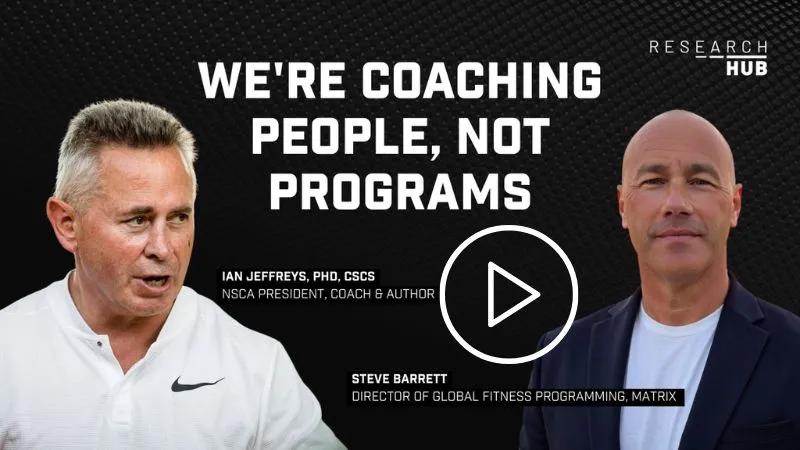
In a recent conversation on Research Hub podcast, Steve Barrett spoke with Professor Ian Jeffreys, President of the National Strength and Conditioning Association, about how the field is changing and what modern strength and conditioning looks like in practice.
Jeffreys has spent his career working across sport, coaching and academia. His perspective highlights an ongoing challenge in performance training. Coaches must translate scientific knowledge into methods that work in real environments.
Performance Is More Than Metrics
Strength and conditioning has traditionally relied on true performance measures such as sprint times, vertical jumps and strength tests. These metrics remain useful, but they only tell part of the story.
Sport rarely happens in controlled testing conditions. Athletes must react to opponents, make decisions and adapt to changing situations. These factors are harder to measure, yet they often determine success in competition.
For coaches, this means data should support decisions rather than define them. Numbers can guide training, but context and coaching experience remain essential.
Speed in the Context of the Game
Jeffreys explores this idea through his concept of Game Speed. Traditional speed training often focuses on straight line sprinting. In many sports, athletes rarely move this way during competition.
Game Speed focuses on how athletes accelerate, decelerate and change direction within the context of the game itself. It encourages coaches to think beyond isolated drills and consider how movement, timing and decision making interact during performance.
In many situations, effective speed training is not just about moving faster. It is about moving effectively within the demands of the sport.
Strength and Conditioning Beyond Elite Sport
The conversation also highlights how strength and conditioning is expanding beyond professional and collegiate athletics. More people in commercial gyms are training with performance goals in mind, whether for endurance events, competitions or long term health.
This shift creates opportunities for strength and conditioning principles to reach a wider audience. Structured progression, strength development and movement quality can benefit anyone who wants to train with greater purpose.
Strength and conditioning is both a science and a coaching craft. The most effective practitioners learn how to combine research, experience and context to help people perform at their best.
Listen to the full conversation to hear Ian Jeffreys discuss the evolving role of strength and conditioning and its growing impact across the fitness industry.

