

Raising Heart Rates to Boost Brain Power


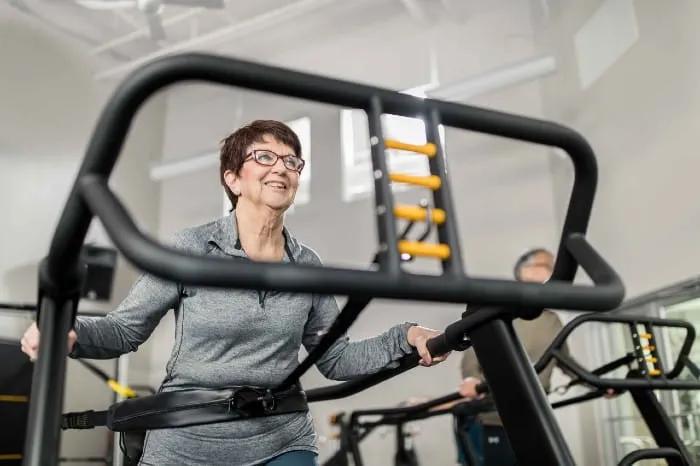
Surveys of health club members over the age of 60 suggest that most recognize the general mental benefits of exercise, yet many still put off joining a health club and making exercise part of their routine. As a fitness professional, you can help them bridge the gap between intention and action by identifying the specific mental advantages of regular exercise. This can help you acquire new members from this underserved demographic and keep them engaged in the exercise experience.
Exercise Maintains Memory
Empower your members and help them make the decision to keep returning by highlighting the benefits of regular exercise. Start by letting them know that exercise matters when it comes to clear thinking. In fact, a commitment to exercise is among the top lifestyle factors that preserves memory. Although small reductions in memory performance begin around age 60 in most individuals, those who exercise can avoid the cognitive decline and preserve memory.
Reducing Risk of Cognitive Decline
Approximately one in four individuals over age 80 have dementia, but exercise reduces this risk significantly. Dementia is a progressive brain disease affecting more than 55 million individuals worldwide, with nearly 40% of 50- to 64-year-olds having a family member with dementia. Simply staving off dementia and the enormous impact it has on the individual and their loved ones can be a powerful motivator for older adults in your fitness facility.
Keep the Cardio
Strength training continues to trend in popularity and is essential for older individuals to maintain their bone and muscle health. Yet research indicates that exclusively strength-based workouts are limited in their ability to improve memory compared to cardio. By elevating the heart rate, cardio workouts both improve circulation in the brain and release memory-supporting molecules. This combination provides the same-day benefit of improving alertness and focus in a way that makes it easier to stay on-task and learn new information. Strength workouts tend to reach lower overall intensities than cardio, providing less challenge to the heart and blood vessels, with little to no release of memory-supporting molecules. The combination of strength and cardio is ideal for fostering both mental and physical health, so we should encourage members to make cardio a part of their routine.
Offering a Better Balance
Fitness facilities offer older adults a convenient way to strike a balance between cardio and strength-based workouts by providing a variety of equipment and group classes. In addition to supporting well-rounded workouts, this variety of options also lets members to focus on specific areas of their body they want to improve. They can even stay active as they recover from orthopedic injuries and find joint-friendly exercise options that are ideal for those with arthritis or over-use injuries. To help older adults make the most of all you offer, make sure your entire staff can direct them to low-impact cardio options and strength-training solutions that fit their unique needs.
The Importance of New Experiences
It’s essential to note that new experiences are beneficial for brain health because novelty activates many of the same regions of the brain as cardio exercise. Yet many health club patrons establish fixed routines and fail to try new options that keep workouts fresh and challenging. By encouraging members to give new equipment a try, you can help them avoid burnout and stay engaged with exercise that challenges both the body and the brain in new ways.
Memorable Benefits
By encouraging a balanced workout that includes cardio, fitness professionals like you can help older adults maintain and even improve their physical fitness and their brain health. With regular exercise, they’ll be able to keep doing the things they love and making memories well into advanced age.

Karlie Intlekofer, PhD, CNC, CPT
References
Barha et al. Sex differences in exercise efficacy to improve cognition: A systematic review and meta-analysis of randomized controlled trials in older humans. Frontiers in Neuroendocrinology 2017; 46: 71-85. https://doi.org/10.1016/j.yfrne.2017.04.002
Goekint et al. Strength training does not influence serum brain-derived neurotrophic factor. Eur J Appl Physiol 2010; 110: 285-93. https://doi.org/10.1007/s00421-010-1461-3
Intlekofer and Cotman. Exercise counteracts declining hippocampal function in aging and Alzheimer's disease. Neurobiology of Disease 2013; 57: 47-55. https://doi.org/10.1016/j.nbd.2012.06.011
Maass et al. Vascular hippocampal plasticity after aerobic exercise in older adults. Mol Psychiatry 2015; 20: 585-93. https://doi.org/10.1038/mp.2014.114
Maust et al. Perception of dementia risk and preventive actions among US adults aged 50 to 64 years. JAMA Neurol 2020; 77(2): 259-62. https://doi.org/10.1001/jamaneurol.2019.3946
Pontifex et al. The effect of acute aerobic and resistance exercise on working memory. Med Sci Sports Exerc 2009; 41(4): 927-34. https://doi.org/10.1249/MSS.0b013e3181907d69
Survey findings available at: https://www.prnewswire.com/news-releases/seniors-sweat-for-free-at-planet-fitness-300314684.html
