

The Future of Fitness: Racing, Tech and Community with Kris Walter


Listen on 

Fitness clubs are changing, but the best member experiences still come back to connection, programming and great coaching.
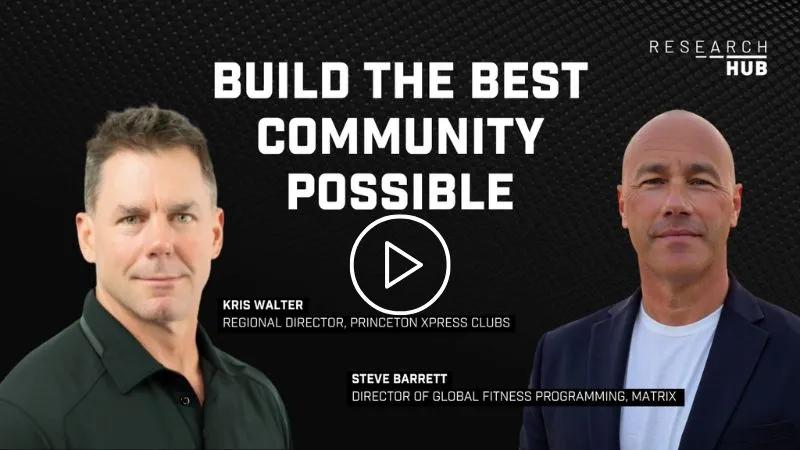
In this Research Hub conversation, Steve Barrett speaks with Kris Walter, Regional Director for Princeton Xpress Clubs, about what keeps fitness members engaged and how clubs can create experiences that support long-term participation. With more than 30 years in the fitness industry, Walter discusses community, small group training, active aging, fitness racing, strength, cardio, functional training spaces and AI in fitness.
Fitness clubs keep changing, yet member engagement still depends on how well a facility connects people to programming and daily support. Equipment and technology matter, but they work best when they fit into a member experience that helps people feel capable, supported and motivated to return.
Community is a retention strategy
Community often develops through small, repeated interactions. A conversation before class, a familiar trainer on the floor or a workout partner can influence how connected a member feels to the club.
Those relationships can become part of the routine. Members may first come in for equipment or a class, then return for the environment, the people and the sense that the club fits into their life. That connection can be especially valuable for members who are new to fitness or unsure where to begin.
For clubs, community is created through staff presence, coaching quality, member introductions, class culture and the everyday tone of the facility.
Small group training creates a better bridge
Small group training continues to gain value as it brings coaching attention into a social training setting. It gives members more guidance than a large class, but it still carries the energy and accountability of training with others.
This format can help trainers build relationships, coach movement and support progress in a setting that feels both personal and approachable. It gives clubs a practical way to connect personal training, group exercise and member engagement.
Walter’s perspective reflects a broader shift in club programming. Members want structure and support, but they respond to connection. Small group training can deliver both when the format is planned well and led by coaches who know the people in front of them.
Programming must leave room for progress
Members enter a facility with different goals, abilities and comfort levels. Good programming gives people a clear place to begin, then helps them move forward without boxing them into one category.
Active aging is a clear example. Programs focused on balance, strength, mobility and endurance can help older adults build a foundation, but the goal should not stop at entry-level participation. A well-built class can become a starting point for broader training, greater capability and new goals over time.
This same idea applies across the club. A new member may need help learning equipment. A regular exerciser may want more structure. A competitive member may need a performance goal. Good programming makes room for each path without making the experience feel separate.
Fitness racing is changing how people train
Fitness racing has added momentum to performance-based training. Events such as HYROX give members a clear goal that combines running, strength and functional movement.
That shift is influencing what members look for inside a club. Treadmills, ski ergs, sleds, kettlebells and open training areas are becoming more closely tied to event preparation and hybrid training.
The trend shows the value of a target date. When members have something to train for, their workouts can become more focused and easier to maintain. Clubs that support this type of goal-based training can give members a clearer reason to engage with programming, coaching and functional spaces.
Strength and cardio need to work together
Strength training continues to influence facility design. More clubs are evaluating their mix of racks, platforms, dumbbells, plate-loaded equipment and open floor space to meet changing demand.
Cardio still plays a major role. Treadmills remain highly relevant in many clubs, and endurance training is central to fitness racing, conditioning and long-term health. Treating strength and cardio as competing priorities misses how members train.
A well-planned facility supports multiple training styles across the day. Functional areas can help connect those styles, especially when they are visible, organized and easy to use. When members can see coached sessions or group activity in those spaces, the value becomes easier to grasp.
AI has a place in coaching delivery
AI is becoming part of the fitness industry conversation, especially in programming, progress tracking and data use. Its value lies in how it supports better decisions and better use of time.
Technology can help trainers create programs, organize information and apply data more efficiently. That can free up more time for coaching, communication and personal connection.
The role of the fitness professional remains central. Trust is built through human interaction. AI can support the process, but the member experience still depends on how well coaches apply their knowledge on the floor.
Watch or listen to the full conversation
This Research Hub episode offers a practical look at the future of fitness clubs and the factors influencing member engagement. Community, coaching, programming, space planning and technology each play a role in creating experiences that members return to.
Listen to the full conversation with Steve Barrett and Kris Walter to hear more about member engagement, fitness racing, AI and the future of club programming.

